
Ambassador Mori Places a Wreath at the Monument to Denmark’s International Contributions on the 15th Anniversary of the Great East Japan Earthquake
2026/3/11
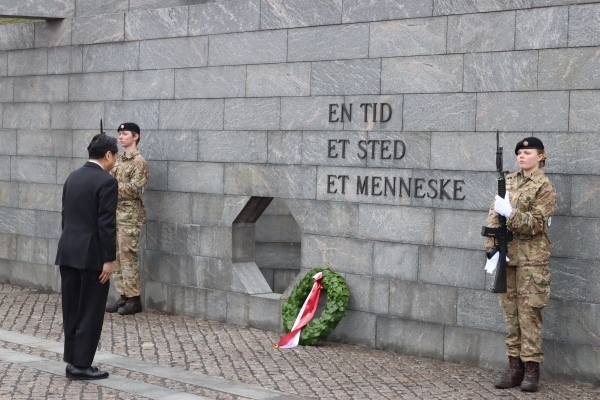
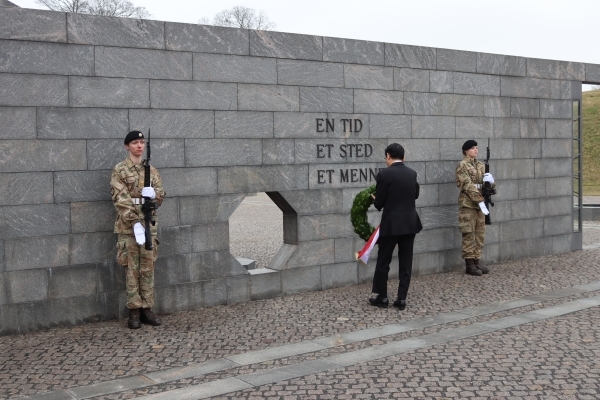
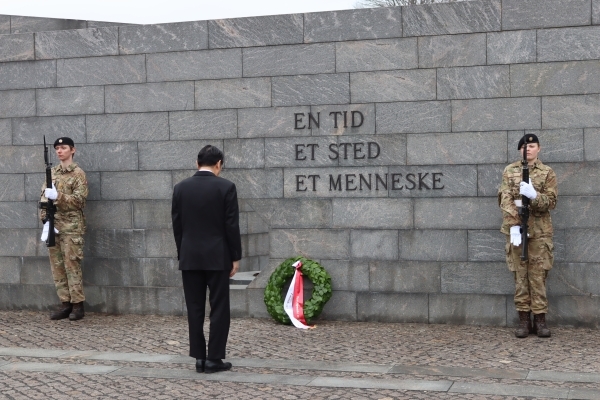
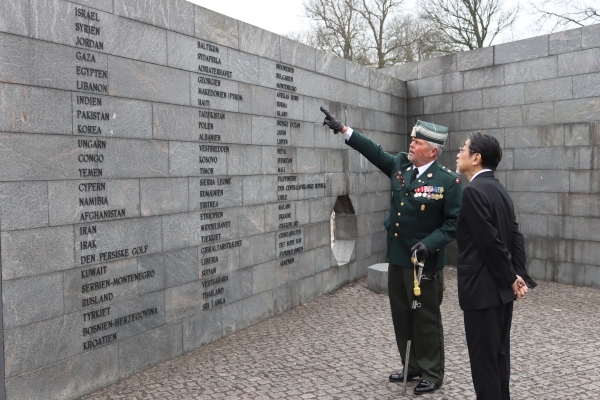
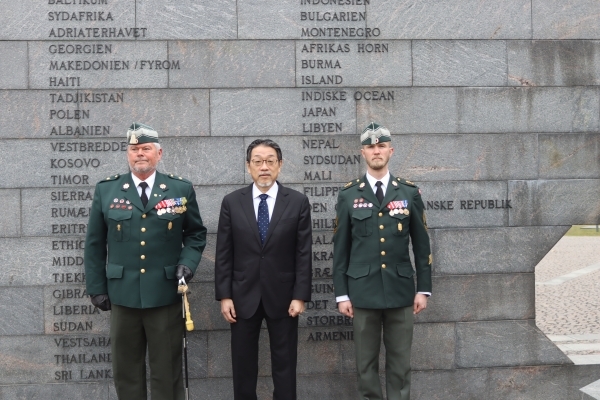
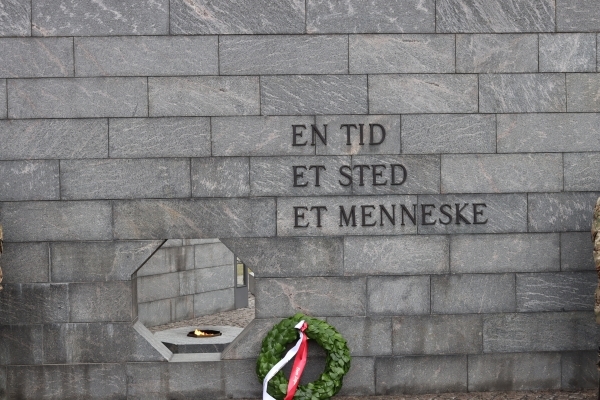
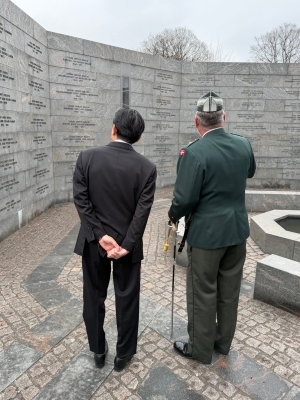
On March 11, 2026, marking 15 years since the Great East Japan Earthquake, Ambassador Mori visited the “Monument to Denmark’s International Contributions since 1948,” established by the Danish Ministry of Defence, to place a wreath in tribute. He expressed his deep gratitude for the warm support extended by the Danish people, offered his condolences to the victims and their bereaved families, and shared his hopes for the recovery and revitalisation of the affected regions.
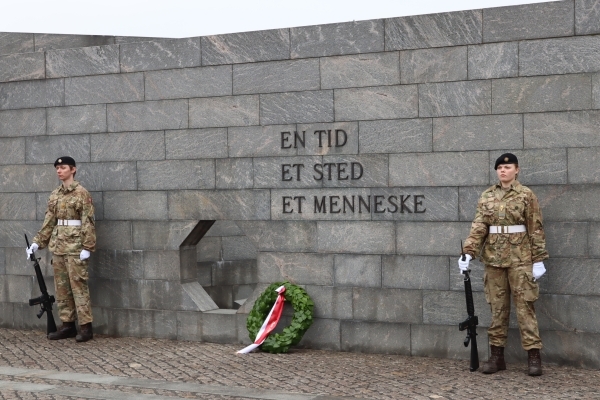
The monument honors the contributions of personnel dispatched abroad by the Danish Ministry of Defence since 1948 (including the Danish Armed Forces and the Danish Emergency Management Agency). It bears the names of countries and regions to which personnel were deployed, as well as the names of service members who lost their lives in the line of duty. In response to the 2011 Great East Japan Earthquake, Denmark dispatched experts as part of the European Union’s assistance to Japan, and accordingly “Japan” is inscribed on the monument.
Denmark’s principal support at the time included:
- A Technical Assistance Support Team (TAST) to support the EU team (March 19–April 9, 2011)
- A team of CBRN (chemical, biological, radiological and nuclear) experts to support the EU team (March 19–April 9, 2011)
- In‑kind assistance of 25,340 blankets for civilian evacuees, shipped from Denmark on March 24, 2011
When His Majesty the Emperor of Japan (then His Imperial Highness the Crown Prince) visited Denmark in 2017, he laid a wreath at the same monument in a ceremony attended by His Majesty King Frederik (then His Royal Highness Crown Prince Frederik). His Royal Highness Crown Prince Frederik also visited Higashimatsushima City, Miyagi Prefecture, on June 14, 2011, soon after the disaster to encourage those affected, and returned there during his 2017 visit to Japan.
In Japan, while reconstruction has progressed—including the recovery of industry in the disaster‑affected areas to pre‑earthquake levels—challenges remain beyond the designated reconstruction and revitalization period. These include responses in areas affected by the nuclear disaster in Fukushima Prefecture, super‑aging and depopulation, and mental health care. Uninterrupted support continues to be provided to address these issues. The Embassy of Japan expresses its continued gratitude for the solidarity and support extended by the people of Denmark.
The monument honors the contributions of personnel dispatched abroad by the Danish Ministry of Defence since 1948 (including the Danish Armed Forces and the Danish Emergency Management Agency). It bears the names of countries and regions to which personnel were deployed, as well as the names of service members who lost their lives in the line of duty. In response to the 2011 Great East Japan Earthquake, Denmark dispatched experts as part of the European Union’s assistance to Japan, and accordingly “Japan” is inscribed on the monument.
Denmark’s principal support at the time included:
- A Technical Assistance Support Team (TAST) to support the EU team (March 19–April 9, 2011)
- A team of CBRN (chemical, biological, radiological and nuclear) experts to support the EU team (March 19–April 9, 2011)
- In‑kind assistance of 25,340 blankets for civilian evacuees, shipped from Denmark on March 24, 2011
When His Majesty the Emperor of Japan (then His Imperial Highness the Crown Prince) visited Denmark in 2017, he laid a wreath at the same monument in a ceremony attended by His Majesty King Frederik (then His Royal Highness Crown Prince Frederik). His Royal Highness Crown Prince Frederik also visited Higashimatsushima City, Miyagi Prefecture, on June 14, 2011, soon after the disaster to encourage those affected, and returned there during his 2017 visit to Japan.
In Japan, while reconstruction has progressed—including the recovery of industry in the disaster‑affected areas to pre‑earthquake levels—challenges remain beyond the designated reconstruction and revitalization period. These include responses in areas affected by the nuclear disaster in Fukushima Prefecture, super‑aging and depopulation, and mental health care. Uninterrupted support continues to be provided to address these issues. The Embassy of Japan expresses its continued gratitude for the solidarity and support extended by the people of Denmark.